
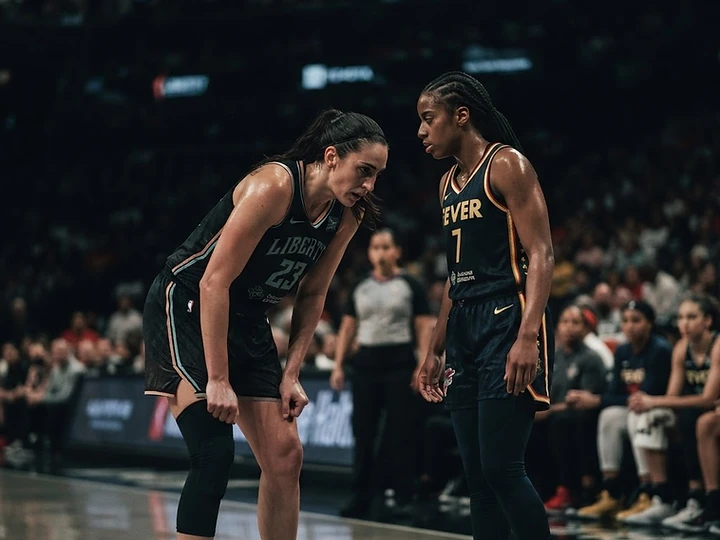
The Clash of Titans
When the New York Liberty faced off against the Indiana Fever this week, the stakes extended far beyond the win-loss column. The game represented a collision between the established excellence of the Liberty’s 'superteam' and the transformative hype surrounding the Fever’s rookie sensation, Caitlin Clark. The resulting surge in search volume—peaking as fans tracked live scores and highlights—is a clear indicator that the WNBA has entered a new era of commercial and cultural relevance. No longer a niche interest, women’s professional basketball is now a primary driver of sports conversation in North America.
At the heart of this trend is the 'Caitlin Clark effect,' a phenomenon that has seen ticket prices soar and viewership records shatter. However, the analytical story is more complex than a single player. The New York Liberty, led by veterans like Breanna Stewart and Sabrina Ionescu, provide the perfect foil to Clark’s rising star. This rivalry is exactly what the league has lacked in previous decades: a narrative-driven, high-skill competition that captures the imagination of casual sports fans. The search data shows that fans are not just looking for Clark; they are increasingly interested in the tactical depth of the Liberty’s offense and the defensive schemes used to contain the Fever’s backcourt.
Economic Shifts and Media Rights
The timing of this surge is critical as the WNBA prepares to negotiate its next media rights deal. The massive growth in search interest and social media engagement provides the league with significant leverage. Broadcasters are no longer seeing women’s sports as a 'charity' buy but as a high-growth asset with a loyal, young, and affluent demographic. The 'Liberty vs Fever' trend is a data point that will likely be used in boardroom negotiations to justify a valuation that could triple or quadruple the league’s current revenue.
Moreover, the geographic hotspots for this trend—spanning from the traditional basketball hubs of the Midwest to the major media markets of the Northeast—suggest that the league’s expansion strategy is working. The WNBA is successfully tapping into regional identities while maintaining a national narrative. This dual-track growth is essential for the long-term sustainability of the league, as it builds a foundation of local fandom that can withstand the inevitable fluctuations of individual player popularity.
The Future of the Game
As the season progresses, the challenge for the WNBA will be to maintain this momentum. The 'Liberty vs Fever' matchup is a blueprint for how the league can market itself: by leaning into the personalities and rivalries that make sports compelling. The analytical takeaway from the current search trends is that the audience for women’s basketball is hungry for high-stakes storytelling. The technical proficiency on the court has always been there; what has changed is the visibility and the narrative framework surrounding it. We are witnessing the birth of a new sporting institution, one where the names Stewart, Ionescu, and Clark are as central to the American sports lexicon as any of their male counterparts. The WNBA renaissance is not just coming; it is already here, and the data proves it.