
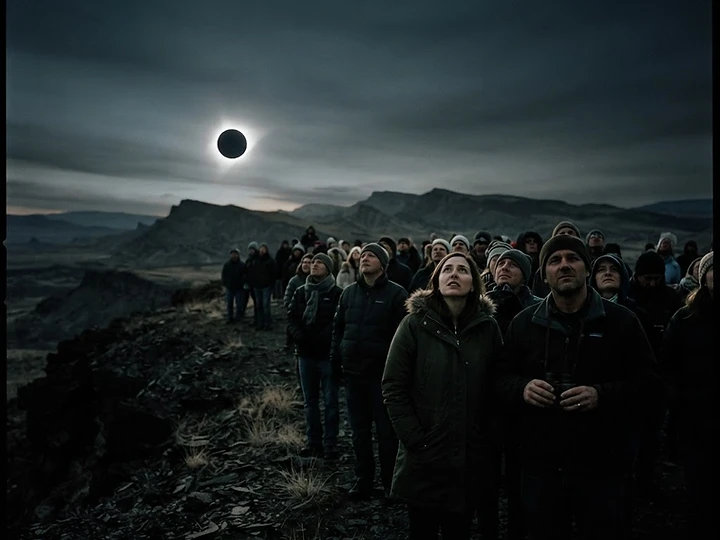
The Celestial Dance
Few events in the natural world command the collective attention of humanity quite like a solar eclipse. Recent spikes in search volume for 'solar eclipses' indicate that despite our modern, tech-saturated lives, the primal urge to look toward the heavens remains undiminished. An eclipse is not merely a shadow; it is a profound reminder of our place in the solar system, a moment where the clockwork of the universe becomes visible to the naked eye.
The Science of the Shadow
At its core, a solar eclipse is a matter of perfect geometry. When the moon passes directly between the Earth and the sun, it casts a shadow that sweeps across our planet. This alignment, known as syzygy, requires precise orbital mechanics. The surge in interest is often driven by the rarity of these events in specific geographic locations. For many, the 'path of totality' is a bucket-list destination, turning astronomical observation into a global travel phenomenon.
Cultural and Psychological Impact
Why do we care so much? Psychologists suggest that eclipses trigger a sense of 'awe'—a complex emotion that makes us feel small in the face of something vast and uncontrollable. In an era where we feel we can control almost every aspect of our environment through technology, the inability to influence the sun's path provides a necessary, humbling perspective. As we look toward future eclipses, the data shows that this interest is not just a passing fad, but a recurring cycle of curiosity that bridges the gap between ancient wonder and modern scientific inquiry.


