
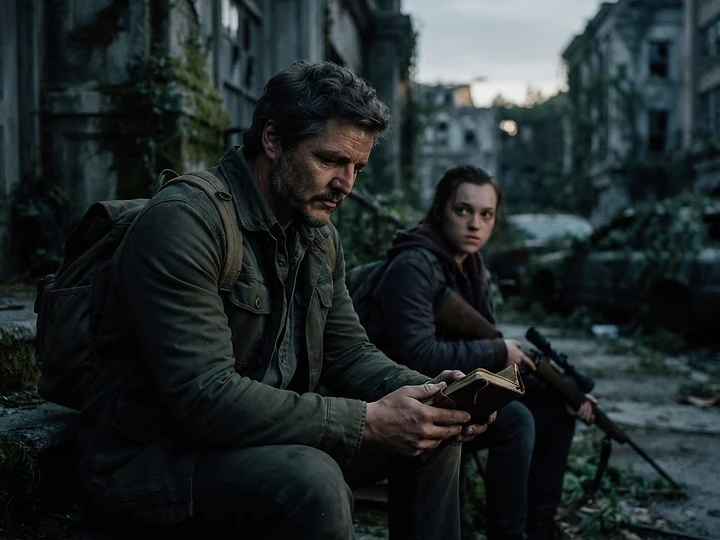
The New Anchor of Prestige Entertainment
There was once an unspoken hierarchy in modern popular culture: literary fiction anchored prestige television, comic books fueled blockbuster cinema, and video games occupied an insular, technologically bounded world. Over the past several years, that dynamic has completely inverted. As updates on HBO’s ongoing pipeline confirm that the sprawling narrative arc of The Last of Us Part II will stretch well into a third season—with executive leadership charting an ambitious multi-season roadmap—video game storytelling has officially transitioned from an auxiliary source of IP into Hollywood’s premier dramatic blueprint.
The durability of The Last of Us on HBO is not merely a testament to the audience's appetite for bleak post-apocalyptic drama; it reflects a watershed moment in how narrative weight is distributed across visual media. When showrunners Craig Mazin and Neil Druckmann committed to splitting the massive, morally destabilizing architecture of the second game across multiple seasons, they made an implicit claim: interactive narrative can no longer be compressed into conventional two-hour features or tidy eight-episode sprints without sacrificing the psychological complexity that made it resonate in the first place.
The Gravity of Interactive Narrative
What makes the cultural grip of Naughty Dog’s work so persistent is its subversion of traditional catharsis. When film stars such as Tom Holland openly acknowledge their reverence for The Last of Us Part II while reflecting on game adaptation trends, they touch upon an emerging industry paradox. The emotional immersion of spending thirty hours physically controlling a protagonist’s descent into grief and vengeance creates an indelible audience connection that passive mediums struggle to replicate.
Historically, video game adaptations failed because directors tried to translate mechanics rather than emotional stakes. The current era of adaptations succeeds precisely because writers treat these virtual universes not as novelty toyboxes, but as moral labyrinths. The dilemma that faced Joel Miller at the close of The Last of Us—and the catastrophic fallout inherited by Ellie and Abby—mirrors the Greek tragedies that defined early television dramas like The Sopranos and The Wire. By embracing the deliberate, episodic pacing of high-end serial television, HBO gave the gaming medium the one thing it had previously been denied on screen: emotional dignity.
The Multi-Medium Franchise Industrial Complex
This shift is altering how development studios operate internally. PlayStation Productions and Naughty Dog are no longer simply game developers outsourcing rights; they have become cross-media architectural firms. With projects expanding across cinematic adaptations, spin-offs, and original IP, the boundary between game director and showrunner has permanently dissolved.
Yet, this cross-pollination brings unique cultural friction. As studios take several years between game installments and prestige television seasons, the modern franchise lifecycle demands unprecedented patience from audiences. A single complete story arc now occupies almost a decade of public consciousness, forcing fans to re-evaluate their relationship with characters across mediums. When a franchise can sustain feverish discourse through trailers, casting reveals, and multi-year production gaps, it moves beyond mere fan service; it becomes a cultural milestone.
Redefining the Modern Mythos
Ultimately, the enduring cultural relevance of The Last of Us signals that video games have become the definitive mythmakers of our contemporary landscape. For a generation reared on the emotive, interactive storytelling pioneered by modern game writers, the medium is no longer a juvenile diversion—it is the foundational canon from which the next generation of dramatists will draw their deepest artistic ambitions.


