
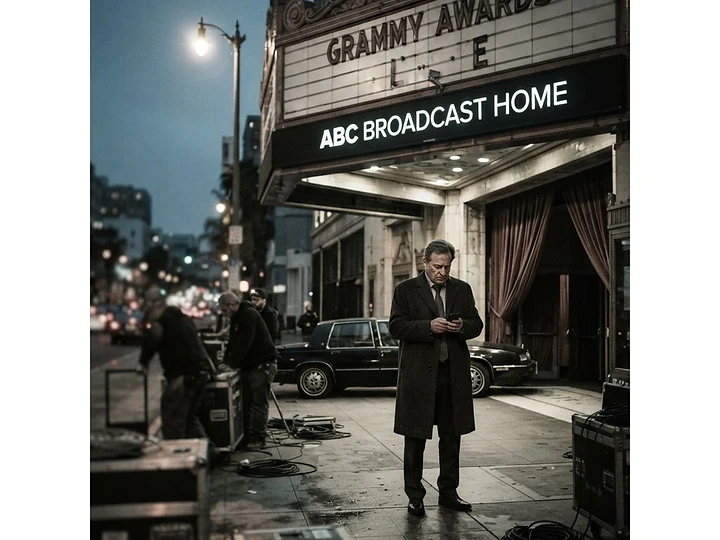
The End of a Fifty-Year Broadcast Marriage
When the Recording Academy confirmed its landmark broadcast migration from CBS to ABC, the shockwaves registered far beyond the corridors of network television executives. For more than half a century, the Grammy Awards served as CBS’s jewel in the crown—an immovable pillar of winter linear television. The transition marks an extraordinary shift in modern television history, heralding an era where legacy awards ceremonies are no longer passive staples of broadcast schedules, but embattled cultural properties actively seeking institutional reinvention.
With nomination dates approaching and the first broadcast under the new rights deal firmly scheduled, the seismic relocation represents more than a cosmetic network rebrand. It underscores an urgent reckoning across live entertainment: can the grand, multi-hour linear spectacle survive the total fragmentation of contemporary pop fandom?
The Battle for the Real-Time Event
For decades, awards ceremonies operated under an unspoken pact with audiences. Millions tuned in across generational divides to watch competing monocultural titans vie for gold. Yet the erosion of linear cable subscriptions and the rise of algorithmic entertainment ecosystems have dismantled that shared national living room. While sports broadcasts have maintained their grip on live viewership through fierce territorial loyalty, awards shows have faced punishing year-over-year erosion.
Under Disney’s operational umbrella, ABC presents a radically different strategic apparatus than CBS could muster in its twilight linear years. Where CBS leaned heavily on prestige legacy branding, ABC’s parent company commands an interconnected distribution web encompassing Hulu, Disney+, and hyper-curated social amplification. The Grammy transition follows the precedent established by the Academy Awards, positioning the music industry's highest honors inside an ecosystem uniquely adept at cross-platform promotion.
Live awards telecasts are no longer measured solely by average-minute Nielsen ratings. Their commercial viability increasingly depends on synchronized social spikes, post-broadcast streaming windows, and digital engagement. For the Recording Academy, aligning with Disney reflects a calculated survival strategy: embedding the ceremony where younger listeners and pop fandoms already consume music journalism and celebrity culture.
Pop Stardom in the Era of Fragmentation
Beyond boardroom rights auctions, the network migration highlights how deeply the definition of pop stardom has transformed. In the 1980s and 1990s, Grammy telecasts codified consensus. A performance by Whitney Houston or Michael Jackson was universally understood, regardless of a viewer’s personal record collection. Today’s pop landscape is defined by passionate yet hyper-siloed micro-communities.
An artist commanding billions of Spotify streams can walk down a suburban street unnoticed by half the population. This dynamic has made programming an awards show an agonizing logistical puzzle. Producers must simultaneously appease traditionalist industry voters, retain older demographic households accustomed to linear broadcast formats, and appease volatile online fandoms capable of transforming an overlooked category into an international digital grievance.
ABC’s incoming tenure will inevitably serve as a laboratory for how live television addresses this divide. Industry insiders anticipate a leaner telecast design, deeper integration of creator-first backstage streaming, and accelerated performance tempos tailored to second-screen consumption.
The New Economics of Live Prestige
Live awards programming remains one of the final testing grounds where advertisers can purchase massive concurrent brand awareness. Even amid shrinking traditional linear numbers, an award telecast commands ad rates few scripted series could dream of courting. In an entertainment landscape increasingly saturated with automated curation, the unpredictable friction of live television remains irreplaceable.
Yet the economic margin for error has vanished. Streamers and networks alike are recognizing that simply pointing cameras at podiums cannot sustain the modern viewer’s wandering attention. The Grammy relocation is an admission that prestige without agile distribution is a recipe for irrelevance.
As fall award season kicks off and networks reposition their tentpole properties, the Grammys' flight from CBS to ABC will be remembered as the moment the old monocultural compact officially dissolved. Survival now demands adaptation, speed, and a surrender to the multi-platform reality of how music is actually lived and felt today.


