

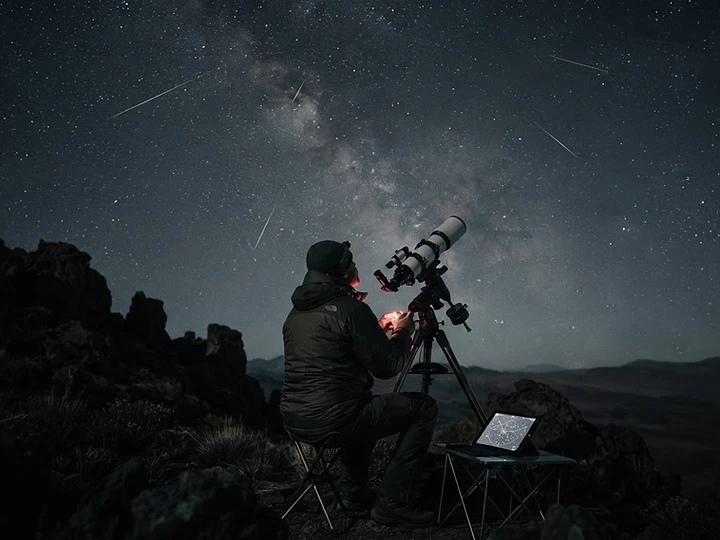
The Return of the Swift-Tuttle Legacy\n\nEvery August, the Earth passes through the debris trail of Comet 109P/Swift-Tuttle, a massive icy wanderer that last visited the inner solar system in 1992. This annual encounter produces the Perseid meteor shower, widely regarded as the most popular celestial event of the year. In 2026, the conditions for viewing are particularly favorable, leading to a massive surge in public interest and scientific engagement. The Perseids are not merely a visual spectacle; they are a tangible reminder of our planet's movement through a crowded and dynamic solar system. The debris, mostly the size of sand grains, enters our atmosphere at staggering speeds of 59 kilometers per second, incinerating in a flash of heat and light that we call shooting stars.\n\n## A Favorable Lunar Window\n\nOne of the primary reasons for the 2026 search volume spike is the timing of the lunar cycle. Unlike years where a bright moon washes out the fainter meteors, 2026 offers a relatively dark sky during the peak nights of August 11 and 12. Astronomers and amateur stargazers alike are capitalizing on this window, with search queries focusing on 'best time to see Perseids' and 'dark sky locations.' This year, observers can expect to see between 60 and 100 meteors per hour at the peak, provided they are away from the encroaching glow of urban light pollution. The predictability of the Perseids makes them a cornerstone of citizen science, as thousands of people contribute to meteor counting projects that help refine our understanding of the comet's debris density.\n\n## The Digital Stargazer's Toolkit\n\nIn 2026, the way we experience the Perseids has been transformed by technology. The rise in search volume is closely tied to the proliferation of augmented reality (AR) stargazing apps and high-sensitivity mobile photography. Users are no longer just looking up; they are using their devices to identify the radiant point in the constellation Perseus and capturing long-exposure shots that were once the exclusive domain of professional astrophotographers. This democratization of astronomy has turned a solitary activity into a shared digital experience, with social media platforms acting as a global campfire for sharing sightings and technical tips. The 'Perseid meteor shower 2026' trend reflects a broader societal desire to reconnect with the natural world through the lens of modern innovation.\n\n## The Threat of Light Pollution\n\nBeneath the excitement lies a growing concern within the scientific community: the rapid loss of the night sky. As search interest peaks, so does the conversation around light pollution. The Perseids serve as an annual audit of our atmospheric clarity. In many parts of the world, the 'milky way' is no longer visible to the naked eye, and the number of visible Perseids is dwindling in suburban areas. This has led to a surge in 'astro-tourism,' where travelers seek out certified Dark Sky Parks to experience the shower in its full glory. The 2026 trend is as much about environmental advocacy as it is about astronomical wonder, as people realize that the ability to see the stars is a natural heritage worth protecting.
24H TRAJECTORY+200%


