The Collapse of the Static Front
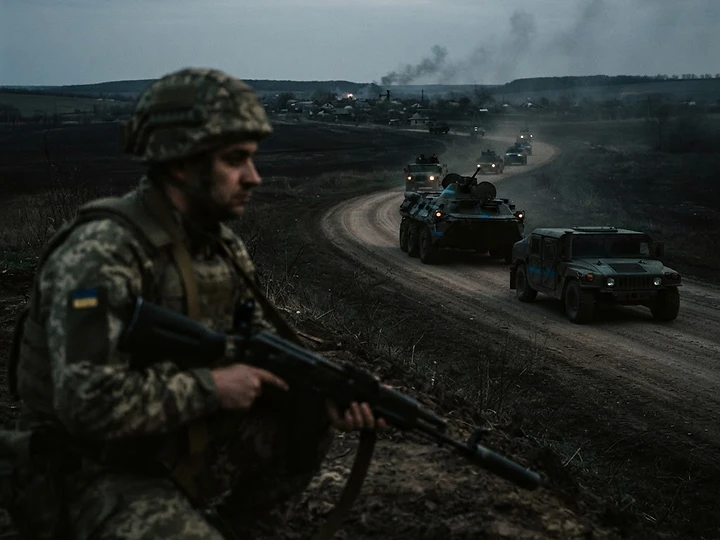
For much of the past year, military analysts have described the conflict in Eastern Europe as a 'war of attrition,' characterized by glacial movements and entrenched positions reminiscent of the First World War. That narrative was unceremoniously discarded this week. The Ukrainian armed forces' lightning strike into Russia’s Kursk region, resulting in the capture of the logistical hub of Sudzha, represents the most significant shift in the war’s tactical geometry since the liberation of Kherson. By taking the fight onto Russian soil, Kyiv has not only seized the initiative but has also forced a fundamental reassessment of Moscow’s internal security posture.
This is not merely a symbolic raid. The scale of the operation—involving multiple brigades, sophisticated electronic warfare, and a sustained logistical tail—points to a strategic objective that goes beyond short-term headlines. Ukraine is effectively carving out a 'security zone' within Russian territory, a move that serves a dual purpose: neutralizing the launch sites for cross-border shelling and creating a significant territorial bargaining chip for any future negotiations.
The Psychological Impact on the Kremlin
The most immediate consequence of the Kursk offensive is psychological. For years, the Kremlin has maintained a social contract with its domestic population: the 'special military operation' would remain a distant event, felt only through economic adjustments and state media reports. The sight of thousands of Russian civilians fleeing their homes in Glushkovsky and the declaration of a federal emergency have shattered that illusion. The domestic narrative of invulnerability has been breached as surely as the border defenses.
Analytically, the Russian response has been tellingly sluggish. The reliance on conscripts and internal security forces to plug the gaps suggests that the Russian high command is hesitant to pull veteran units away from the Donbas front. This hesitation is precisely what Ukraine intended to exploit. By forcing Moscow to choose between defending its own sovereign territory and maintaining its offensive momentum in the east, Kyiv has introduced a level of strategic friction that has been absent for months.
Logistics and the Sudzha Hub
The focus on Sudzha is particularly critical. As a key transit point for one of the last remaining pipelines carrying Russian natural gas to Europe, the town holds outsized economic and political importance. While Ukraine has signaled it does not intend to disrupt energy flows to its allies, the mere presence of Ukrainian troops at such a vital node sends a powerful message. It demonstrates that no Russian asset, regardless of its strategic value, is beyond the reach of a determined and mobile adversary.
Furthermore, the capture of over 100 Russian servicemen in a single day—the largest such surrender of the war—highlights a breakdown in frontline cohesion. These prisoners of war are not just numbers; they are a vital resource for future exchange, offering hope for the return of Ukrainian defenders who have been in captivity for years. The sheer efficiency of the Ukrainian advance suggests a level of operational security and coordination that many observers feared had been lost.
A New Phase of Asymmetric War
As the smoke clears over the Kursk salient, the broader implications for international law and Western support are becoming apparent. The decision by key allies, including the United Kingdom, to permit the use of donated weaponry for operations inside Russia marks the crossing of another 'red line' that once seemed impassable. It reflects a growing consensus that for Ukraine to defend itself, it must be allowed to strike the source of the aggression.
However, the risks remain high. An extended occupation of Russian territory will require immense resources and leaves Ukrainian forces vulnerable to counter-encirclement. The coming weeks will determine whether this incursion is a brilliant tactical masterstroke that leads to a strategic turning point, or a daring gamble that overextends Kyiv’s finite reserves. Regardless of the outcome, the map of the war has been irrevocably changed. The border is no longer a shield; it is a new and volatile front.