
The Return to the Roots of Deception
In an era where reality television has become increasingly synonymous with influencer culture and pre-packaged celebrity narratives, the premiere of The Traitors: New Blood feels like a necessary correction. By casting 22 civilians—individuals entirely unaccustomed to the glare of the spotlight—Peacock has effectively stripped away the performative layers that defined recent seasons. The result is a game that feels more dangerous, more unpredictable, and significantly more authentic than its star-studded predecessors.
Why Civilian Casting Matters
For years, the Traitors franchise leaned heavily into the 'celebrity' hook, bringing together reality stars from Survivor, Big Brother, and Love Island to navigate the Scottish Highlands. While these seasons provided high-octane drama, they often suffered from 'meta-gaming,' where contestants arrived with pre-existing alliances or a deep understanding of how to play for the cameras. New Blood changes the calculus entirely. Without the safety net of a public persona to protect, these new players are forced to rely on raw intuition and social deduction. The stakes feel higher because the players are not playing for brand expansion; they are playing for the $250,000 prize pot and the sheer thrill of the psychological warfare.
The Alan Cumming Factor
At the center of this chaos remains Alan Cumming, whose role as the flamboyant, wicked host has become the glue holding the franchise together. In New Blood, Cumming seems to relish the lack of celebrity ego. He is no longer managing the temperaments of reality TV veterans; he is orchestrating a social experiment with a blank slate. His interactions with the civilian cast feel sharper, as he leans into the gothic, theatrical nature of the game without needing to cater to the 'star power' of his subjects. This shift allows the game mechanics—the banishments, the murders, and the grueling missions—to take center stage.
A New Era of Strategy
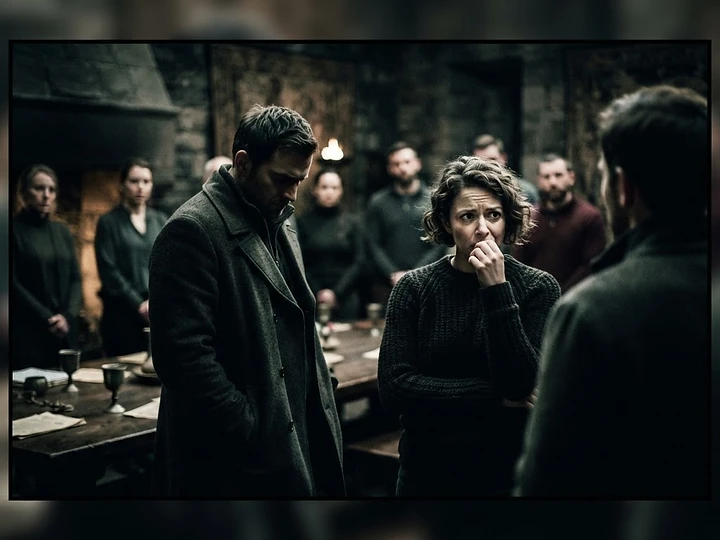
Early episodes suggest that the absence of fame has led to a more paranoid, high-stakes environment. Without the ability to rely on past reputations, players are forced to scrutinize every micro-expression and verbal slip. The 'Round Table' segments, often the highlight of the series, have regained their edge. When a civilian is accused of being a Traitor, the defense is not a rehearsed soundbite but a desperate, often clumsy attempt at survival. This vulnerability is exactly what the franchise needed to avoid stagnation. As the season progresses, the question remains: can a group of strangers maintain the level of treachery required to keep the audience hooked, or will the lack of 'big personalities' eventually lead to a quieter, more methodical game? For now, the answer is a resounding yes. The Traitors: New Blood proves that the most compelling reality TV isn't about who you know, but how well you can lie to the people you just met.


