
A Nation on the Edge
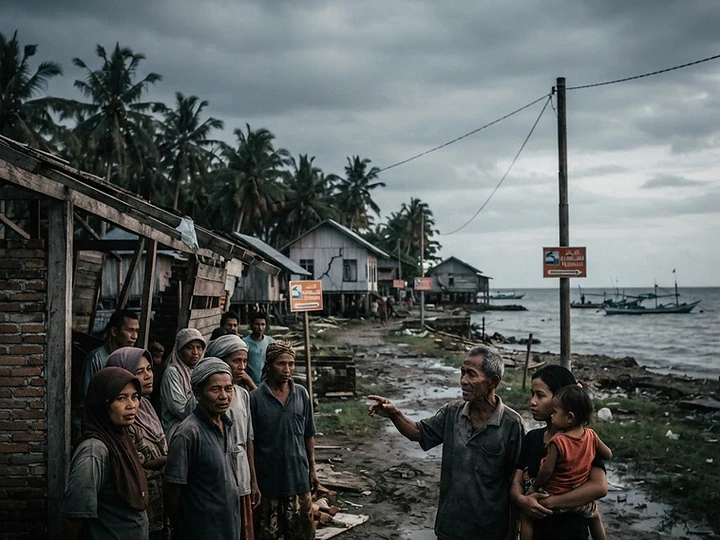
Indonesia’s recent seismic event, which triggered over 100,000 searches as citizens and international observers scrambled for information, serves as a stark reminder of the archipelago’s position atop the world’s most active tectonic boundaries. Situated on the 'Ring of Fire,' Indonesia is no stranger to the earth’s volatility, yet each major tremor brings a fresh wave of anxiety regarding infrastructure resilience and the efficacy of early warning systems. The latest quake, centered near a densely populated coastal region, has reignited debates over urban planning and the long-term sustainability of coastal living in a geologically unstable zone.
Geologists point out that the Indo-Australian plate’s subduction beneath the Eurasian plate creates a constant buildup of pressure that must inevitably be released. While the magnitude of the recent event was significant, it is the depth and proximity to the shoreline that often determine the level of devastation. In this instance, the immediate concern was the potential for a tsunami—a threat that remains etched in the collective memory of the nation since the catastrophic events of 2004. The search data reflects this fear, with 'tsunami warning' and 'BMKG' (the Indonesian Agency for Meteorology, Climatology, and Geophysics) dominating the queries.
The Technology of Survival
In the aftermath of the quake, the focus has shifted to the technological infrastructure designed to mitigate disaster. Indonesia has invested heavily in a network of sensors and buoys, but maintenance and vandalism have historically plagued these systems. The recent surge in search interest highlights a critical gap in public communication; while the government issued alerts via SMS and social media, many residents reported confusion over evacuation routes. This disconnect suggests that while the science of earthquake detection has advanced, the sociology of disaster response still requires significant investment.
Furthermore, the economic impact of these recurring disasters cannot be overstated. Each major earthquake necessitates a massive reallocation of government funds from development projects to emergency relief and reconstruction. For a developing economy like Indonesia, the 'seismic tax' is a heavy burden. Analysts argue that the only way to break this cycle is through 'build back better' initiatives that prioritize earthquake-resistant architecture and the relocation of critical infrastructure away from high-risk zones.
Global Implications of Local Tremors
Beyond the immediate humanitarian concerns, the earthquake has implications for global supply chains. Indonesia is a major exporter of nickel and other critical minerals, and many of its processing facilities are located in areas vulnerable to seismic activity. A major disruption in these regions could send shockwaves through the global electric vehicle and electronics industries. As the world watches the recovery efforts, the international community is reminded that geological stability is a prerequisite for economic stability. The 'Indonesia earthquake' trend is more than a news headline; it is a signal of the ongoing vulnerability of our interconnected global systems to the raw power of the natural world.