
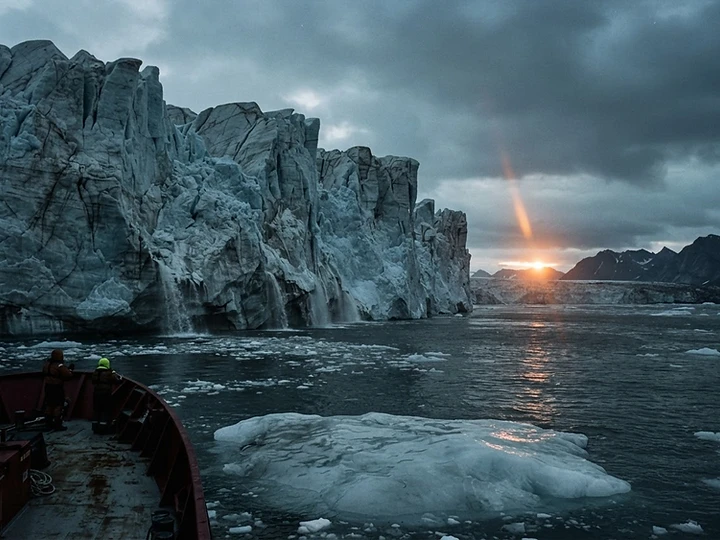
An Archive of What Is Leaving
On a frozen shelf in a high valley, a team maps a glacier to the millimeter. They know it will not outlive them. What they are building is not a map but a memorial — a record exact enough that, if anyone ever wished to rebuild it, they would know where every crevasse once ran.
The Method
The work combines LiDAR, ground-penetrating radar, and a patient photography that captures the ice in light it will never see again. Each glacier becomes a dataset measured in terabytes, a ghost rendered in numbers.
We are writing the obituary of a landscape while it is still breathing.
Why It Trended
The project trended when a time-lapse, stitched from a year of hourly photographs, was released. It showed, in two minutes, a glacier's collapse. People shared it not as science but as elegy — the visible vanishing of something that had, for every human generation before ours, simply been there.
The Ethics of Memory
Some glaciologists are uneasy. An archive, they warn, can become a permission — a way of accepting loss by ensuring it is well-recorded. Others counter that memory is the precondition of accountability. To forget what we lost is to forgive the losing of it.
What the Ice Keeps
Trapped in the layers are records of past atmospheres, a chronicle written in air. As the ice goes, so does a library no human ever catalogued. The archivists know their work is, in part, salvage — and in part, a stubborn refusal to let the warming go unrecorded. The trend may fade. The data, they hope, will outlast the ice.


