
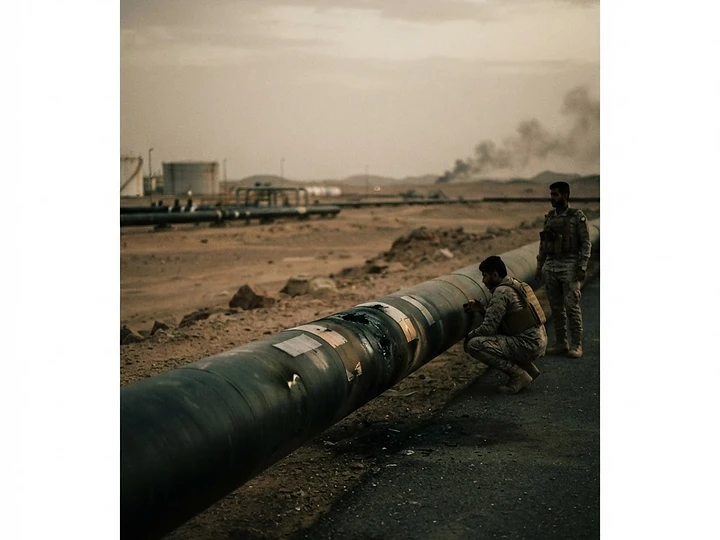
Why this is trending right now
Saudi authorities suspended operations on the East-West crude oil pipeline following multiple coordinated drone strikes originating from Iraqi territory, according to reporting by CNBC and regional monitoring alerts. The East-West infrastructure, also known as the Petroline, is Saudi Aramco's primary overland alternative to transit through the Strait of Hormuz, capable of moving roughly 5 million barrels of crude per day across the peninsula to the Red Sea port of Yanbu. News of the sudden shutdown triggered an immediate spike in global energy searches and market uncertainty, particularly coming alongside escalating geopolitical friction involving Washington and Tehran reported by NPR 1A.
The last 24 hours: a timeline
Early in the morning, defense radars identified an incoming swarm of unmanned aerial vehicles entering Saudi airspace from the north across the Iraqi border, targeting pumping stations along the central section of the Petroline.
By midday UTC, field personnel detected physical impact and localized fire damage at two key booster stations, prompting safety engineers to initiate an emergency depressurization and flow halt across the line.
Within hours of the incident, CNBC confirmed that Saudi Arabia formally ordered the shutdown of the East-West pipeline to inspect secondary pipe segments and assess electrical infrastructure integrity. Global commodities desks reacted immediately, with brent crude contract volumes escalating sharply as traders factored in maritime rerouting risks.
Late in the 24-hour cycle, regional diplomatic dispatches linked the strikes to militias operating inside Iraq, aligning with broader geopolitical statements reported by NPR 1A regarding expanded alliance pledges between Moscow and Tehran amidst renewed friction in the Persian Gulf.
What could happen next
Reopening the East-West pipeline depends entirely on technical inspections at the affected pumping stations. If structural damage is isolated to external switchgear and auxiliary manifolds, engineers could restore partial throughput within 48 to 72 hours under defensive air escorts. Conversely, if high-pressure pipe segments suffered structural warping, full repairs will require weeks of fabrication and testing.
Energy analysts project that sustained disruption will force Saudi Aramco to redirect crude volumes back toward Ras Tanura for tanker transport through the Strait of Hormuz. Based on recent statements tracked by CNBC, regional naval patrols are expected to expand security corridors around coastal loading facilities. Observers should track Saudi Ministry of Energy bulletins and Iraqi security operations along the southern border for confirmation of counter-drone deployment timelines.
SOURCES — THE RECORD
- Economic News - Trending NowCNBC · cnbc.com
- Latest from CNBCCNBC · cnbc.com
- The News Roundup: Renewed Violence Between Washington and TehranNPR · npr.org


