
Why this is trending right now
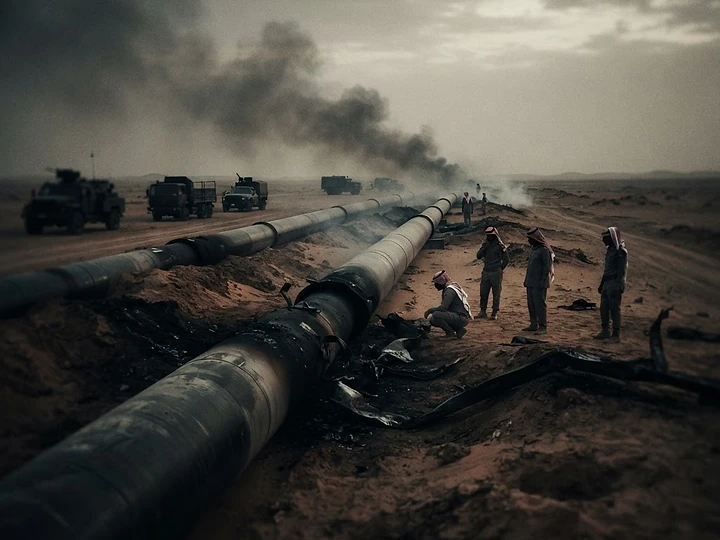
Global energy markets experienced an immediate supply shock after Saudi Arabia temporarily shut down operations along its East-West crude oil transit corridor following coordinated drone incursions originating from southern Iraq, as confirmed by reporting from CNBC. The East-West pipeline represents Saudi Aramco's primary domestic bypass route around the Strait of Hormuz, maintaining a transport capacity of roughly 5 million barrels per day linking eastern oil fields directly to Yanbu terminals on the Red Sea.
The military strikes and subsequent flow stoppage renewed security premiums in crude futures, prompting broad-based queries from commodity desks, maritime insurers, and energy macro funds seeking clarity on operational timelines and infrastructure damage assessments.
The last 24 hours: a timeline
Security alerts were issued in the early morning hours after multi-directional unmanned aerial systems crossed into northern Saudi airspace from Iraqi territory, targeting pumping facilities along the pipeline corridor.
By mid-morning, Saudi civil and defense officials confirmed localized impact at intermediate pressure pumping stations, initiating precautionary automated shutdowns along the pipeline trunkline to isolate vulnerable segments and extinguish infrastructure fires.
During afternoon trading in London and New York, commodity desks responded to emergency statements reported by CNBC. Brent crude contracts priced in immediate geopolitical risk premiums as tanker operators and charter brokers assessed potential redirection delays at the Red Sea port of Yanbu.
In late-evening communiqués, regional maritime security monitors noted heightened naval escorts and enhanced radar surveillances along northern Saudi infrastructure zones as technical inspection teams mobilized to assess structural damage to the East-West line.
What could happen next
Physical damage assessments will determine whether pipeline flows remain suspended for days or extend into multi-week outages. Historical repairs to Saudi Aramco pipeline infrastructure indicate that sectional isolation mechanisms generally allow partial line capacity to restart within 72 hours, provided booster turbine equipment did not sustain catastrophic thermal damage.
From a market standpoint, extended disruption along the Red Sea terminal route will force Saudi crude loadings back into Persian Gulf transit lanes via the Strait of Hormuz. This shift would elevate commercial tanker freight insurance rates in the Persian Gulf and provoke diplomatic pressure on regional security arrangements between Riyadh, Baghdad, and Washington.
SOURCES — THE RECORD
- Latest from CNBCCNBC · cnbc.com
- OECD Weekly Tracker of Economic ActivityOECD · oecd.org
- Google Trends: Trending NowGOOGLE TRENDS · trends.google.com