
Why this is trending right now
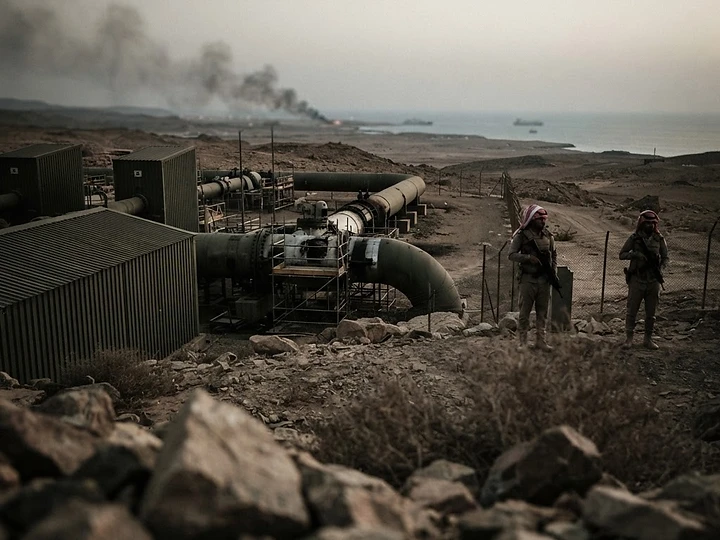
Global energy markets and search channels reacted sharply following Saudi Arabia's decision to shut down operations along its 1,200-kilometer (750-mile) East-West crude oil pipeline. The emergency closure followed coordinated drone strikes originating from Iraqi territory that hit pumping facilities south of Medina. Concurrently, Yemen's Houthi movement secured full control over Mayun Island (Perim) in the Bab al-Mandeb Strait after overrunning the mainland port of Mocha. The confluence of these two disruptions imperils the secondary transit channel that Riyadh used to bypass the contested Strait of Hormuz, threatening 4 million to 5 million barrels per day of global crude flows—representing 4% to 5% of worldwide supply.
The last 24 hours: a timeline
- Friday, September 11 (22:00 UTC): Houthi forces complete their coastal push from Mocha to establish control over Mayun Island, severing Yemeni government coastal defensive lines.
- Saturday, September 12 (06:00 UTC): Unmanned aerial systems trace a trajectory from Iraq's Maysan province to strike two booster pump stations along the Saudi East-West pipeline.
- Saturday, September 12 (13:30 UTC): Iraqi authorities remove the regional military operations commander in Maysan, launching an investigation and temporarily shuttering three border crossings into Iran.
- Saturday, September 12 (18:00 UTC): President Donald Trump tells reporters in Dublin that American intelligence suspects Iranian regional proxies conducted the pipeline attack, while confirming Crown Prince Mohammed bin Salman requested defensive intelligence assistance.
- Sunday, September 13 (06:00–11:00 UTC): Satellite reconnaissance verifies structural damage near Medina; Saudi Aramco initiates engineering inspections while maintaining pipeline flow halts as a precautionary protocol.
What could happen next
Based on regional trade data from the International Energy Agency, the shutdown compounds a supply deficit that saw Saudi crude production dip to 6.0 million barrels daily in August. If repair assessments by Saudi Aramco confirm critical structural breach at the targeted booster units, trans-peninsular throughput will remain frozen for weeks, diverting tanker traffic back into contested perimeter routes or forcing production curtailments. Analysts at Capital Economics note that sustained closure risks driving crude oil prices toward $120 per barrel. Diplomatically, regional officials convene in Muscat, Oman, on Monday for emergency security discussions involving Gulf states and Iranian envoys. Washington has signaled it will provide surveillance and radar coverage rather than direct kinetic strikes, leaving Yemeni government forces to organize counter-offensives around Mocha autonomously.
SOURCES — THE RECORD
- Saudi Arabia Closes East-West Pipeline Following Aerial Drone IncursionDAWN / REUTERS · dawn.com
- Houthis Close in on Bab el-Mandeb as Saudi Arabia Strikes BackTHE INDIAN EXPRESS · indianexpress.com
- Saudi Arabia, Houthis Trade Strikes Over Strategic Bab al-MandebTHE BUSINESS STANDARD / AL JAZEERA · tbsnews.net