
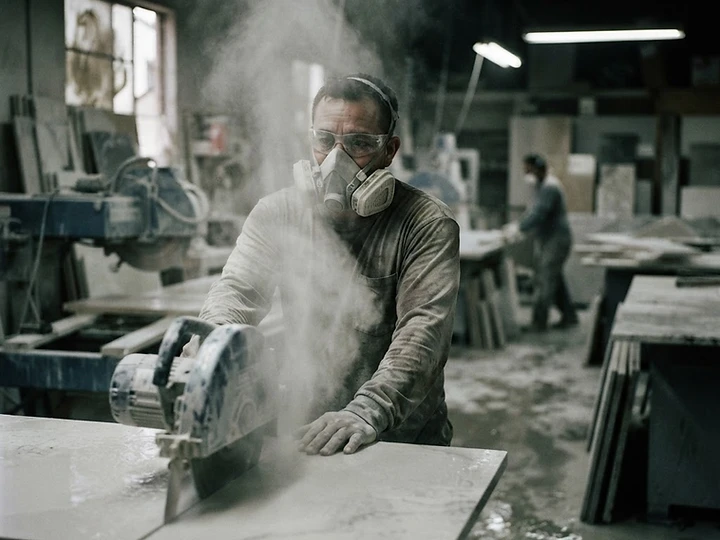
A Modern Industrial Hazard
For years, engineered quartz countertops have been the gold standard in modern kitchen design, prized for their durability and aesthetic versatility. However, a dark reality has emerged behind the polished surfaces: a significant rise in silicosis, a debilitating and often fatal lung disease, among the workers who cut and polish these materials. The fine silica dust generated during the fabrication process is highly toxic, and the current surge in search interest reflects a growing public awareness of this occupational health crisis.
The Science of Silica Exposure
Silicosis occurs when workers inhale crystalline silica dust, which causes scarring and inflammation in the lungs. Unlike natural stone, engineered quartz contains a significantly higher percentage of silica, making the dust generated during fabrication far more dangerous. The industry has long operated under the assumption that standard protective equipment would suffice, but recent data suggests that without rigorous wet-cutting techniques and advanced ventilation, the risk remains unacceptably high.
Regulatory Shifts and Consumer Responsibility
Governments are now under pressure to implement stricter bans or mandatory safety certifications for stone fabrication facilities. For the consumer, this raises difficult ethical questions. Is the beauty of a quartz countertop worth the health of the worker who crafted it? As the industry faces potential litigation and tighter regulations, we are likely to see a shift toward safer, alternative materials. The conversation is no longer just about home improvement; it is about the human cost of our interior design choices.


