
A Cinematic Inheritance
When Denzel Washington embarked on his ambitious mission to adapt August Wilson’s ten-play 'American Century Cycle' for the screen, he wasn't just producing films; he was curating a cultural monument. With the arrival of 'The Piano Lesson' on Netflix, directed by his son Malcolm Washington, that mission reaches a poignant, haunting crescendo. The film, which explores the fractured dynamics of the Charles family in 1930s Pittsburgh, serves as a masterclass in how theater translates to the screen when handled with reverence and a keen eye for the supernatural weight of history.
The Piano as a Vessel of Memory
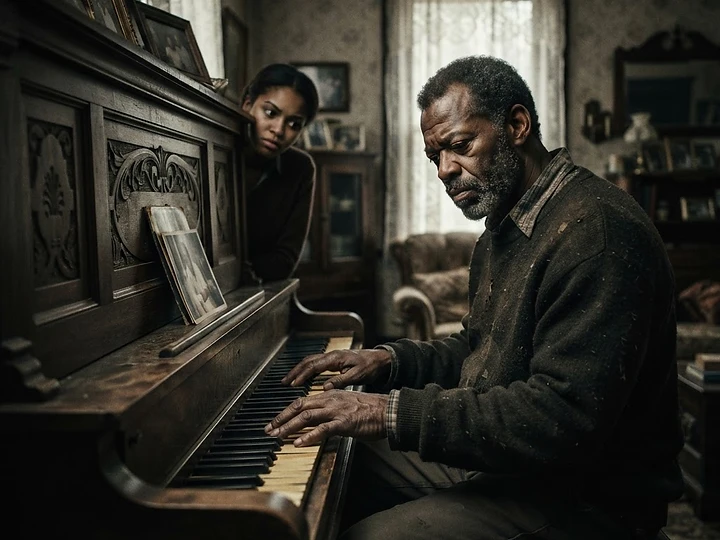
At the heart of the narrative is an heirloom piano, intricately carved with the faces of enslaved ancestors. For Boy Willie, played with kinetic, desperate energy by John David Washington, the instrument is a commodity—a means to purchase the land his ancestors once worked as slaves. For his sister Berniece, portrayed with profound, quiet intensity by Danielle Deadwyler, the piano is a sacred altar, a vessel of trauma and memory that must remain silent to keep the ghosts of the past at bay. This central conflict is not merely a domestic dispute; it is a profound meditation on the Black American experience, questioning whether we honor our ancestors by moving forward or by standing still in the shadow of their suffering.
A Legacy of Performance
Samuel L. Jackson, reprising the role of Doaker Charles—a character he originated in the 1987 stage production—anchors the film with a weary, rhythmic wisdom. His presence acts as a bridge between the theatrical roots of the material and the cinematic intimacy of the adaptation. The inclusion of Erykah Badu in a musical cameo further underscores the film’s commitment to the soulful, rhythmic cadence of Wilson’s dialogue. Malcolm Washington’s direction leans into the gothic elements of the play, utilizing the camera to capture the claustrophobia of the household, where the past is not just remembered—it is physically present.
Why It Resonates Now
In an era where the conversation around historical legacy and the repatriation of cultural artifacts is more urgent than ever, 'The Piano Lesson' feels startlingly contemporary. The film forces the audience to confront the 'cost' of our history. Are we defined by the trauma of our lineage, or can we transcend it? By focusing on the domestic sphere, the film avoids the didactic, instead allowing the characters to wrestle with their own contradictions. It is a rare piece of entertainment that demands both intellectual engagement and emotional surrender, proving that the most powerful stories are often those that have been waiting in the wings for decades, ready to be heard anew.


