
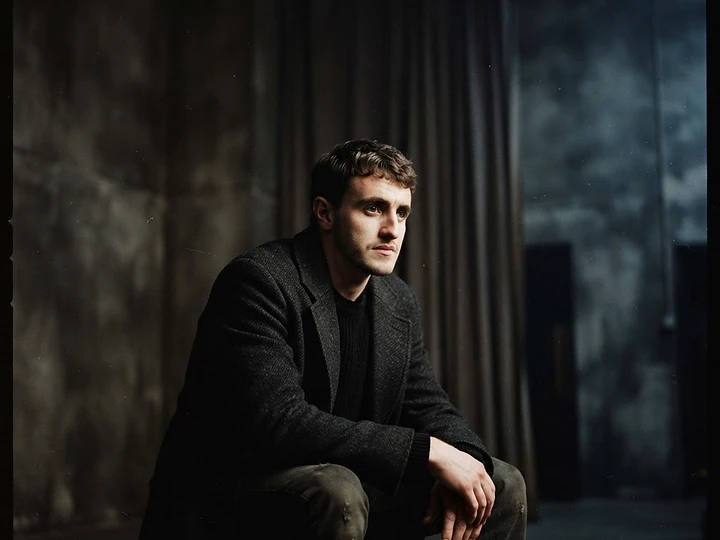
When a Hollywood epic carries a production budget north of $200 million, the weight of the spectacle inevitably lands on its central leading man. In recent days, film culture circles ignited over explosive rumors alleging that director Ridley Scott privately questioned whether star Paul Mescal possessed the traditional "masculine" grit needed to carry Gladiator II—an account swiftly rebutted by Scott’s representatives in statements clarifying there was never any bad blood between the director and actor. Yet the viral velocity of the claim revealed a raw nerve running through contemporary entertainment: cinema’s fractured definition of the heroic male archetype.
The Ghost of the Millennium Action Hero
To understand why the debate caught fire, one has to look back a quarter of a century to the turn of the millennium. In 2000, Russell Crowe’s Maximus Decimus Meridius embodied a classic, weathered cinematic stoicism. Maximus was an archetype carved out of classical grief, visceral muscle, and booming conviction—a performance that netted Crowe an Academy Award and revitalized the historical sword-and-sandal genre.
When Ridley Scott ventured back into the Colosseum for Gladiator II, he consciously avoided casting a mirror image of Crowe. Paul Mescal, whose meteoric rise was fueled by tender, melancholic turns in Normal People and Aftersun, represents an entirely different cinematic proposition. His Lucius was framed with an inward complexity, wrestling with lineage and grief rather than roaring through the arena solely on adrenaline. While early festival reactions called the sequel an audacious, unhinged triumph, a faction of traditional critics argued that Mescal lacked the imposing ferocity expected of an arena champion.
Shifting Archetypes in Blockbuster Casting
The friction points surrounding Mescal speak directly to Hollywood’s larger ongoing transition. In recent years, studios have increasingly elevated actors associated with vulnerability and art-house emotional depth into tentpole roles. From Timothée Chalamet leading the desert sands of Dune to Mescal strapping on Roman armor, the industry has actively courted a younger, emotionally literate audience that rejects the blunt machismo of the 1980s and 1990s.
Yet this transformation creates an inevitable culture clash when applied to legacy properties designed around ancestral definitions of brawn. Fans conditioned by retro action cinema expect a singular kind of physical dominance. When that expectation is met instead with introspection, conflicted hesitation, or a leaner, athletic sensitivity, casual viewers often mistake narrative restraint for a lack of screen presence. Blaming a film's commercial challenges on an actor’s perceived deficit of archaic "masculinity" represents a familiar, reactionary scapegoating mechanism.
The Box Office Blame Game
The broader context reveals that modern box office dynamics are far more complex than the physique or tonal palette of any single protagonist. While Gladiator II mounted substantial global returns—spurred on by the organic "Glicked" counterprogramming phenomenon alongside Wicked—the economics of modern mega-budget filmmaking leave little margin for nuance. Studio slates frequently demand theatrical hauls approaching half a billion dollars just to break even.
When industry chatter attempts to reduce multi-layered distribution challenges to an individual actor’s aesthetic, it exposes a fundamental anxiety within mainstream moviemaking. Hollywood remains torn between nostalgic yearning for bygone archetypes and the necessary evolution of its stars. As Mescal and his contemporaries continue to redefine what heroic resilience looks like on screen, the cultural conversation will continue to test the boundaries between classic machismo and modern nuance.


