
The Final Service
When the final credits rolled on the fifth season of FX’s The Bear, it marked more than just the conclusion of a television show; it signaled the end of a cultural phenomenon that fundamentally altered how we perceive the professional kitchen. For five seasons, the journey of Carmy, Sydney, and Richie served as a high-pressure mirror to our own anxieties, professional burnout, and the desperate search for perfection in an imperfect world. As the kitchen lights dimmed for the last time, the industry is left to grapple with the void left by a series that turned the 'pressure cooker' into a narrative art form.
The Rise of Chefcore
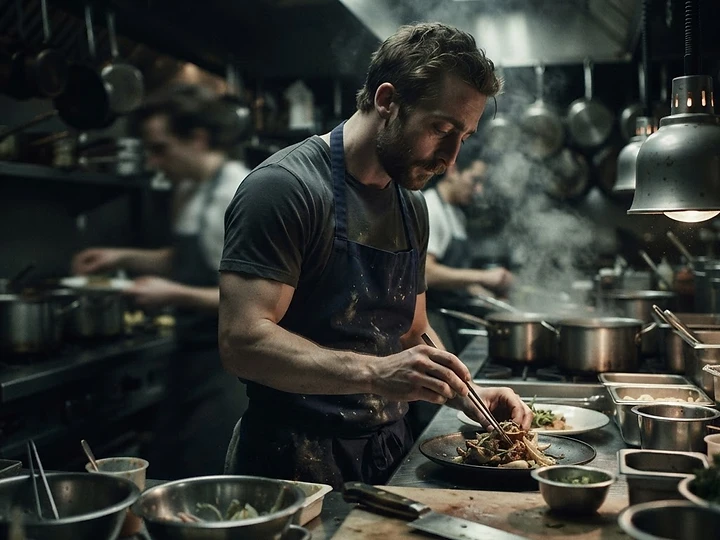
Perhaps the most tangible legacy of The Bear is the birth of 'Chefcore.' What began as a costume choice—the crisp white T-shirt, the utilitarian apron, the Birkenstock clogs—evolved into a full-blown fashion movement. The show’s aesthetic, characterized by a rugged, no-nonsense minimalism, became a shorthand for authenticity in an era of digital artifice. Jeremy Allen White’s portrayal of Carmy Berzatto didn't just win awards; it turned the chef’s uniform into a high-fashion staple, proving that the most compelling style is often found in the trenches of labor rather than the runways of Paris.
Beyond the Kitchen
While the show was ostensibly about food, its true subject was the 'invisible tether' of human connection. The relationship between Sydney and Tina, the volatile brotherhood of Richie and Carmy, and the collective struggle to keep a business afloat resonated with a generation defined by the gig economy and the pursuit of 'meaningful work.' The show’s ability to make an omelette or a sandwich feel like a life-or-death endeavor captured the zeitgeist of 2026—a year where the line between our personal identity and our professional output has never been thinner.
A Lasting Aftertaste
As we look back at the series, it is clear that The Bear succeeded because it refused to offer easy answers. It didn't promise that hard work would always lead to a Michelin star, nor did it suggest that the trauma of the past could be easily cooked away. Instead, it offered a raw, unflinching look at the cost of excellence. Now that the kitchen is closed, the cultural conversation shifts from the show itself to the vacuum it leaves behind. We are left with a new vocabulary—'Yes, Chef'—and a heightened appreciation for the craft behind the scenes. The show may have ended, but the 'Chefcore' aesthetic and the obsession with the grind are likely to persist, serving as a permanent reminder of the season when television finally learned to sweat.


