
Why this is trending right now
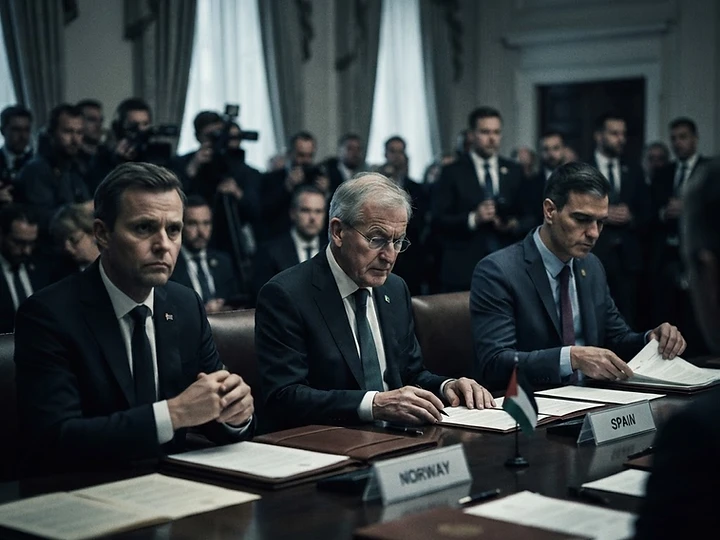
Ireland, Norway, and Spain have officially announced their intention to recognize a Palestinian state, a move that represents a significant shift in European diplomacy regarding the Middle Middle East. According to statements released by the heads of government in Dublin, Oslo, and Madrid on May 22, 2024, the formal recognition will take effect on May 28, 2024. As reported by CBS News, Irish Taoiseach Simon Harris, Norwegian Prime Minister Jonas Gahr Støre, and Spanish Prime Minister Pedro Sánchez held coordinated press conferences to state that a two-state solution is the only viable path to lasting peace in the region. This development has triggered a diplomatic crisis, with Israeli Foreign Minister Israel Katz immediately ordering the recall of Israel's ambassadors from the three countries for "urgent consultations." The move is trending due to its potential to create momentum for other European Union member states to follow suit, further isolating Israel’s current government on the international stage.
The last 24 hours: a timeline
Early in the morning of May 22, 2024, Norwegian Prime Minister Jonas Gahr Støre opened a press conference in Oslo at 8:00 AM local time. He declared that "there cannot be peace in the Middle East if there is no recognition," confirming Norway would recognize Palestine as an independent state.
Within the same hour, Irish Taoiseach Simon Harris spoke outside government buildings in Dublin. He stated that Ireland was taking this step to keep the hope of a two-state solution alive, likening the Palestinian struggle for self-determination to Ireland's own history of seeking international recognition in 1919.
By midday in Madrid, Spanish Prime Minister Pedro Sánchez addressed the Spanish Parliament. He criticized Prime Minister Benjamin Netanyahu’s government for its conduct in Gaza and stated that the recognition was an act of "peace, justice, and moral consistency."
By 2:00 PM UTC, the Israeli Ministry of Foreign Affairs issued a stinging rebuke, with Minister Israel Katz characterizing the decision as a "distorted step" and a "gold medal" for Hamas. Katz warned that the recognition would have "severe consequences" for bilateral relations. Throughout the afternoon, Palestinian officials and leaders of the Palestine Liberation Organization (PLO) issued statements of jubilation, calling the move a historic victory for international law and the Palestinian people's right to self-determination.
What could happen next
The coordinated recognition by these three nations is likely to increase pressure on other EU members, specifically Slovenia and Malta, which have previously signaled their readiness to take similar steps. While the European Union as a whole remains divided—with Germany and France maintaining that recognition should result from direct negotiations between Israel and the Palestinians—this "lightning cascade of announcements" (as termed by Reuters) weakens the consensus for waiting.
Inferred from current diplomatic posturing, Israel is expected to implement further retaliatory measures, potentially including the suspension of tax revenue transfers to the Palestinian Authority or the approval of new settlement units in the West Bank. The United States has already reiterated its position that Palestinian statehood should be achieved through direct negotiations rather than unilateral recognition. Consequently, while the May 28 effective date will elevate the status of Palestinian diplomatic missions in Dublin, Oslo, and Madrid to full embassies, it is unlikely to change the immediate security situation on the ground in Gaza or the West Bank without a broader ceasefire agreement. Observers should look for the UN General Assembly's reaction, as this move could bolster the ongoing Palestinian bid for full United Nations membership.
SOURCES — THE RECORD
- Norway, Ireland and Spain say they are recognizing a Palestinian stateCBS NEWS · cbsnews.com
- Three European countries to recognize Palestinian statehoodTIME · time.com
- Israel recalls ambassadors as European nations move toward recognitionNPR · npr.org