
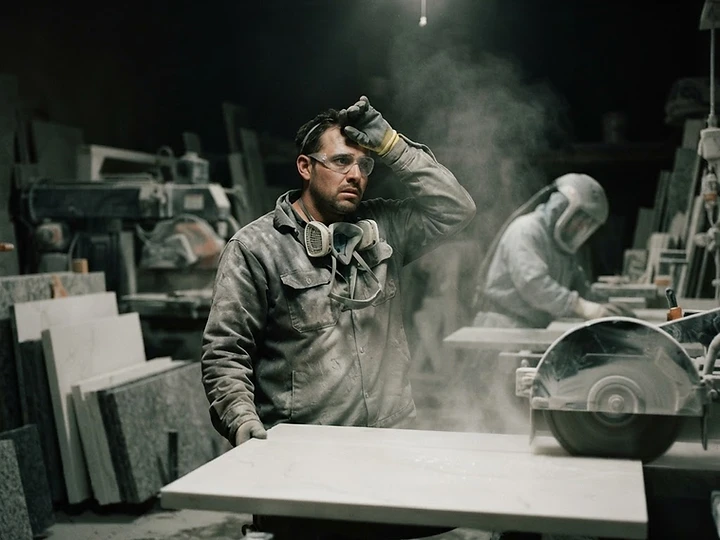
The Rise of Engineered Stone
For the past decade, engineered quartz has dominated the home renovation market, prized for its durability, variety, and relatively low cost compared to natural marble or granite. However, this aesthetic trend has a dark side that is only now reaching the forefront of public consciousness. As noted in recent Google Trends reports, the search for "california quartz countertop silicosis" has seen a massive spike, driven by a series of alarming health reports and new emergency regulations in California. The material, which is composed of crushed stone bound together by resin, contains significantly higher levels of silica than natural stone. When this material is cut, ground, or polished without adequate protection, it releases a fine dust that, when inhaled, leads to irreversible lung damage.
The Biological Toll of Silica Dust
Silicosis is an ancient disease, long associated with mining and masonry, but its resurgence in the countertop industry represents a modern occupational health crisis. The fine crystalline silica particles penetrate deep into the lungs, causing inflammation and scarring (fibrosis) that makes breathing increasingly difficult. Unlike other occupational illnesses that may take decades to develop, the form of silicosis seen in quartz workers is often "accelerated," affecting young men in their 20s and 30s after only a few years of exposure. The medical community has raised alarms as the number of cases in California has climbed, leading to calls for a total ban on the material, similar to actions taken in Australia. The human cost of a popular kitchen upgrade is becoming impossible to ignore, as workers face the prospect of lung transplants or premature death.
Regulatory Responses and Industry Resistance
California has taken the lead in addressing this crisis, implementing emergency temporary standards to protect workers. These regulations mandate wet-cutting methods and rigorous respiratory protection, but enforcement remains a significant challenge. Many stone-cutting operations are small, independent shops that may lack the resources or the will to comply with stringent safety standards. Furthermore, the industry has pushed back, arguing that the material itself is not the problem, but rather the failure to follow existing safety protocols. However, as search interest in stone countertop silicosis grows, consumers are beginning to question the ethics of their renovation choices. The debate is no longer just about worker safety; it is about the sustainability of a global supply chain that prioritizes low-cost luxury over human life. The outcome of California's regulatory experiment will likely set the precedent for the rest of the United States and beyond.


