
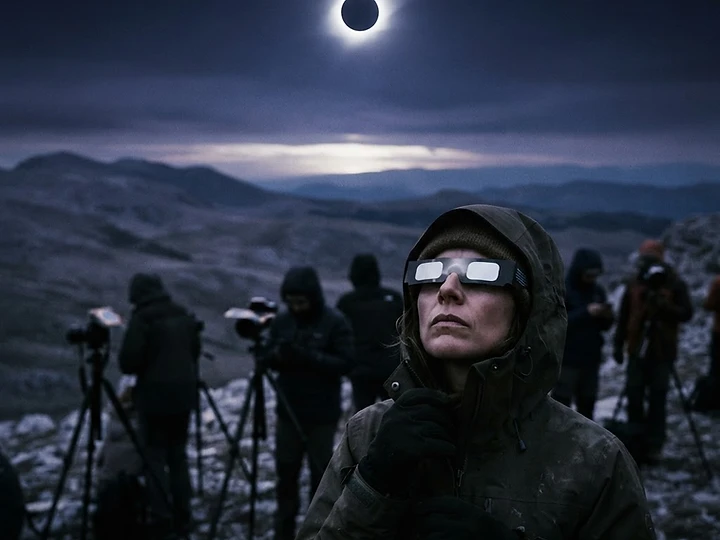
A Celestial Appointment
The search for 'solar eclipses' has seen a dramatic 400% spike, driven by the anticipation of the August 12, 2026, total solar eclipse. Unlike previous events that were confined to specific continents, the 2026 eclipse promises a spectacular path of totality that will sweep across Greenland, Iceland, and Spain. This geographic diversity has sparked a unique surge in travel-related searches, as 'eclipse chasers' begin the multi-year process of securing logistics for what is being called the 'Great European Eclipse.'
Total solar eclipses are rare opportunities for the public to engage directly with the mechanics of the solar system. The search data reveals a hunger for scientific literacy, with users looking for information on the 'corona,' 'Baily's beads,' and the specific timing of totality in various cities. This isn't just about a pretty sight; it is about a collective human experience that reminds us of our place in the cosmos.
The Economics of Totality
The economic impact of a total solar eclipse cannot be overstated. In 2024, the eclipse across North America generated billions in economic activity. The current search trends suggest that Spain and Iceland are already seeing a 'pre-trend' in hotel bookings and flight inquiries for August 2026. Small towns located directly in the path of totality are preparing for an influx of visitors that could triple their population overnight.
For policymakers, the search volume serves as an early warning system. Infrastructure, public safety, and eye protection supplies must be managed years in advance. The search data shows that the public is already looking for 'solar eclipse glasses' and 'safe viewing locations,' indicating a high level of awareness and a desire for preparedness. This proactive behavior is a hallmark of the modern, information-rich era of amateur astronomy.
Science Under the Shadow
From a scientific perspective, the 2026 eclipse offers a rare chance to study the sun’s outer atmosphere in conditions that are difficult to replicate in a lab. NASA and other space agencies are already planning missions to coincide with the event. The search interest in 'solar eclipse 2026' is not just limited to tourists; it includes educators and students looking for resources to understand the physics of the event.
As the moon passes between the Earth and the Sun, the sudden drop in temperature and the emergence of the stars in the middle of the day create a profound psychological impact. The search trends reflect this, with a significant number of queries related to the 'feeling' of an eclipse and its historical significance. We are witnessing the digital manifestation of an ancient human wonder, updated for the 21st century.


