
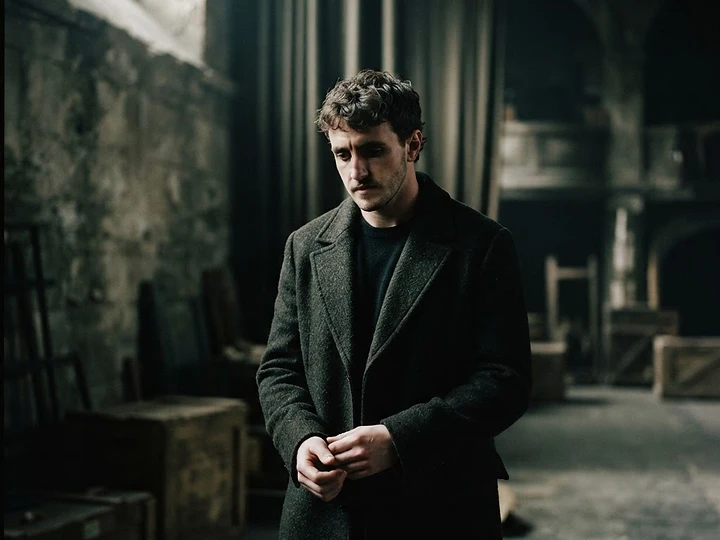
The Anatomy of a Hollywood Rumor
In the high-stakes ecosystem of modern Hollywood, the line between professional critique and personal narrative often blurs. This week, the industry was set abuzz by a report suggesting that legendary director Ridley Scott had expressed reservations regarding Paul Mescal’s performance in Gladiator II, specifically citing a lack of "masculinity" as a reason for the film's perceived underperformance. The claim, which quickly circulated through trade circles and social media, suggested a rift between the director and his lead actor, potentially explaining Mescal’s departure from Scott’s upcoming project, The Dog Stars.
However, the speed at which this narrative took hold was matched only by the swiftness of its rebuttal. Representatives for Ridley Scott issued a categorical denial, labeling the report as "not true" and affirming that the director maintains a strong, collaborative relationship with Mescal. By clarifying that Mescal’s exit from The Dog Stars was purely a matter of scheduling conflicts—specifically, a clash with rehearsal commitments for another production—the studio effectively dismantled the premise of a falling out.
The Burden of the Blockbuster
At the heart of this discourse lies the immense pressure placed on Gladiator II. As a sequel to one of the most beloved epics in cinematic history, the film faced an uphill battle from its inception. While it grossed over $462 million worldwide, the film’s reception has been a polarized affair. Critics and audiences alike have debated whether the sequel successfully captured the gravitas of the original or if it leaned too heavily into the spectacle of the arena.
For Paul Mescal, stepping into the role of Lucius meant inheriting the legacy of a franchise that defined a generation of historical action films. When a film of this magnitude fails to meet the stratospheric expectations of the box office or critical consensus, the lead actor often becomes the lightning rod for public frustration. The "masculinity" critique, while debunked, speaks to a broader, often reductive, tendency to judge actors based on their ability to embody traditional archetypes rather than the nuance of their performance.
Beyond the Arena
Paul Mescal’s career has been defined by a deliberate pivot toward complex, often vulnerable roles, from Normal People to All of Us Strangers. His recent public advocacy for transgender rights and his vocal support for the trans community have further solidified his status as an actor who operates outside the traditional "action star" mold. This commitment to social causes, combined with his choice of roles, suggests an artist more interested in cultural resonance than in maintaining a rigid, hyper-masculine public persona.
As Gladiator II finds a second life on streaming platforms, the conversation is shifting from the initial box office metrics to the film’s long-term legacy. The recent controversy serves as a reminder of how quickly narratives can be weaponized in the digital age. For Ridley Scott and Paul Mescal, the focus remains on their respective futures—Scott continuing his prolific output and Mescal continuing to challenge the boundaries of his craft. The "masculinity" debate, ultimately, says far more about the industry’s obsession with casting archetypes than it does about the reality of the creative process.


