
The End of the Game
When the first season of Squid Game premiered, it did more than just break viewership records; it fundamentally altered the landscape of global streaming. It proved that a non-English language production could dominate the cultural zeitgeist with the force of a Hollywood blockbuster. Now, as the dust settles on the final season, we are left to reckon with the legacy of a show that turned the critique of late-stage capitalism into a high-stakes, neon-drenched spectator sport.
A Mirror to Modernity
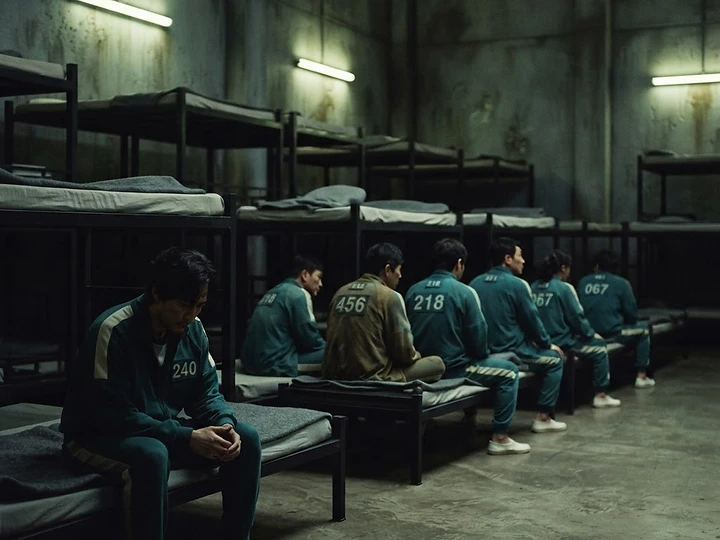
At its core, the series succeeded because it tapped into a universal anxiety. By framing the crushing weight of debt and wealth inequality through the lens of childhood games, creator Hwang Dong-hyuk created a visual language that was instantly recognizable yet deeply unsettling. The show’s aesthetic—the pink guards, the green tracksuits, and the stark, geometric arenas—became a shorthand for the precarious nature of the modern economy. It was not merely a thriller; it was a sociological experiment that resonated from Seoul to São Paulo.
The Evolution of the Hallyu Wave
Squid Game served as the ultimate catalyst for the 'Hallyu' or Korean Wave, accelerating the global appetite for South Korean storytelling. Following the success of films like Parasite, the series solidified the idea that Korean creators were the most adept at blending genre-bending thrills with biting social commentary. The show’s success forced Western studios to rethink their content strategies, leading to a surge in international investment and a genuine shift in what global audiences consider 'mainstream' entertainment.
Beyond the Screen
Perhaps the most fascinating aspect of the show’s trajectory was its migration into the real world. From viral social media challenges to its integration into gaming platforms like Fortnite, the series transcended the television screen. It became a cultural touchstone that creators used to explore local identities, as seen in regional adaptations where creators reimagined the games through the lens of their own childhood memories. This adaptability is what kept the show relevant long after the initial hype cycle faded.
The Final Verdict
As we look back at the conclusion of the series, it is clear that Squid Game was never just about the prize money. It was about the human cost of the systems we inhabit. While the games have ended, the conversation it sparked regarding class, greed, and the ethics of entertainment remains as relevant as ever. The show leaves behind a blueprint for how to capture the world’s attention without sacrificing the integrity of a local story. It was a rare moment where the entire world was watching the same game, and for a brief, harrowing moment, we all understood the rules.


