
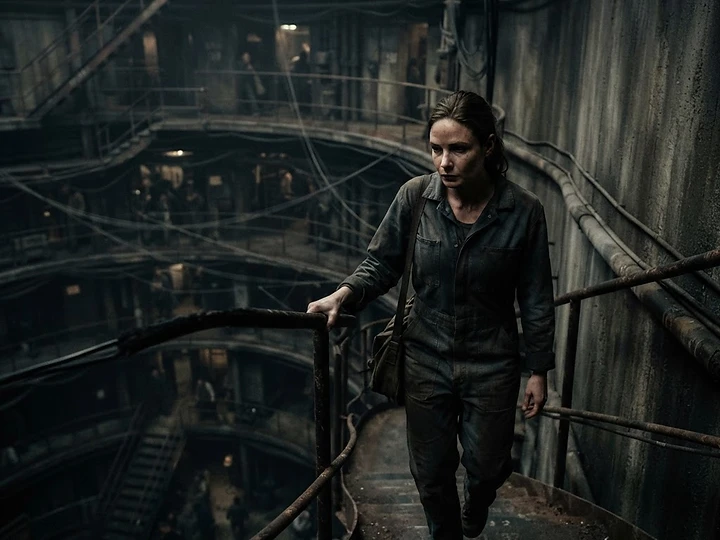
The Architecture of Dystopia
Since its debut, Apple TV’s Silo has stood as a masterclass in world-building, transforming Hugh Howey’s dense literary trilogy into a claustrophobic, high-stakes television event. With the conclusion of its third season, the series has officially transitioned from a slow-burn mystery into a full-scale narrative sprint toward its inevitable conclusion. The announcement that the show will wrap with a fourth season, slated for July 9, 2027, marks a rare moment of narrative discipline in an era of endless streaming franchises.
A Legacy of Secrets
At the heart of the series remains Rebecca Ferguson’s portrayal of Juliette Nichols, an engineer whose journey from the depths of the mechanical levels to the terrifying truth of the surface has anchored the show’s emotional core. Over three seasons, the series has meticulously peeled back the layers of the underground society, moving from the localized politics of the silo to the broader, more existential questions regarding the 'Before Times.' The transition from the second to the third season saw the show expand its scope, introducing new cast members and deepening the lore, proving that the series was never intended to be a perpetual machine, but rather a finite story with a clear destination.
The Final Chapter
By confirming that the fourth season will be the final one, showrunner Graham Yost and the creative team have signaled a commitment to the source material—Wool, Shift, and Dust. This decision avoids the common pitfall of 'serial bloat,' where successful dramas are stretched beyond their natural lifespan. Instead, Silo is positioning itself to deliver a cohesive, four-act structure that promises to answer the lingering questions that have haunted viewers since the first episode. The recent trailer for the final season suggests a shift toward open conflict, moving away from the internal surveillance state of the early seasons toward a more explosive confrontation with the reality of the outside world.
Why It Matters
Silo has become a benchmark for Apple TV’s original programming, proving that high-concept science fiction can find a massive, dedicated audience when paired with strong production values and a clear vision. As we look toward the 2027 finale, the conversation surrounding the show has shifted from 'what is the secret?' to 'how will they survive the truth?' This shift in discourse is a testament to the show’s ability to evolve. While the wait for the final season is significant, the promise of a definitive conclusion ensures that Silo will be remembered as a complete, well-crafted piece of television history rather than a show that simply faded away.


