
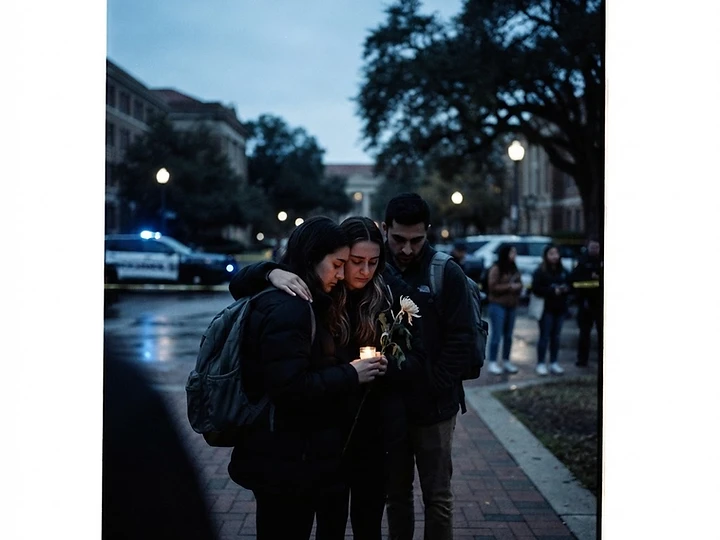
The Incident at Virginia State
The recent reports of a shooting at Virginia State University have sent shockwaves through the academic community, marking yet another entry in a grim ledger of campus violence. According to Google Trending Now, the search volume for this incident surged past 100,000 queries within hours, reflecting a public that is increasingly attuned to the immediate dangers present in educational environments. The incident, which led to an immediate lockdown and a massive law enforcement response, highlights the fragile nature of security in open-campus settings. While details regarding the motive and the specific sequence of events continue to emerge, the immediate impact is clear: a community left in a state of trauma and a nation once again asking how such events continue to occur with such regularity.
The Systemic Failure of Campus Security
For decades, universities have struggled to balance the ideal of an open, accessible campus with the harsh reality of modern security needs. The Virginia State incident underscores the limitations of current protocols. Despite the implementation of advanced alert systems and increased campus police presence, the ability to prevent a determined individual from bringing a firearm onto campus remains elusive. Critics argue that the focus has been too heavily weighted toward response rather than prevention. The rapid rise in search interest for "campus safety protocols" suggests that students and parents are no longer satisfied with reactive measures. There is a growing demand for more rigorous access control and mental health intervention programs that can identify potential threats before they manifest in violence.
Legislative Deadlock and the Path Forward
Politically, the shooting at Virginia State serves as a catalyst for the ongoing debate over gun control and campus carry laws. In Virginia, a state with a complex history of firearm legislation, the incident has prompted immediate calls for reform from advocacy groups. However, the legislative path remains fraught with partisan division. Proponents of stricter regulations point to the ease with which firearms are obtained, while opponents argue that the focus should remain on mental health and the hardening of soft targets. The data from Google Trends indicates that this is not merely a local concern but a national one, with search interest peaking in major metropolitan areas across the country. As the investigation continues, the pressure on state and federal lawmakers to move beyond rhetoric and toward actionable policy is reaching a breaking point. The cycle of tragedy followed by legislative inertia has become a predictable, yet devastating, pattern in American life. Breaking this cycle will require a fundamental shift in how society values the safety of its students relative to the preservation of existing firearm statutes.