
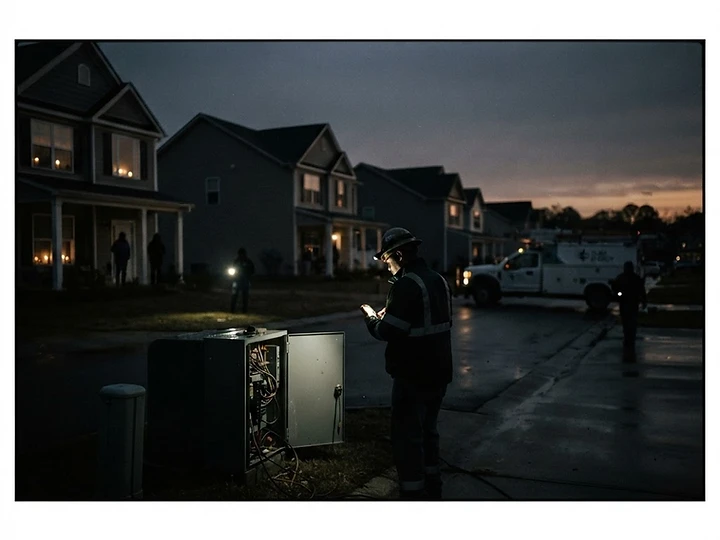
A System Under Strain
When the lights go out for thousands of residents across the Southeast, the first place they turn is Google. The recent 800% surge in searches for 'Duke Energy power outage' is more than just a localized inconvenience; it is a digital distress signal reflecting a national crisis in infrastructure. As one of the largest energy holding companies in the United States, Duke Energy serves as a bellwether for the reliability of the American grid. The current outages, triggered by a combination of severe weather and peak demand, underscore a fundamental reality: our electrical systems were not built for the climate of the 21st century. The search data shows a clear pattern of anxiety as consumers seek not just restoration times, but answers to why these failures are becoming more frequent.
The Climate Connection
Meteorological volatility is no longer an outlier; it is the new baseline. The geographic hotspots for these searches—primarily in North Carolina, South Carolina, and Florida—align perfectly with the path of recent atmospheric disturbances. Duke Energy has been vocal about its transition toward a cleaner energy future, but the transition period is proving to be fraught with reliability challenges. The integration of renewable sources like solar and wind requires a more flexible and intelligent grid, yet the physical hardware—the transformers, lines, and substations—is often decades old. This 'infrastructure gap' is where the current outages live, and the public's search behavior suggests a growing awareness of this systemic vulnerability.
The Economic Toll of Darkness
Beyond the immediate discomfort of a blackout lies a significant economic impact. For small businesses, a four-hour outage can mean the difference between a profitable week and a loss. For the healthcare sector, it is a matter of life and death. The search volume for 'Duke Energy' often peaks during business hours, indicating that the commercial sector is just as affected as the residential one. As we look toward a future of increased electrification—from vehicles to home heating—the pressure on utilities like Duke Energy will only intensify. The current trend is a warning shot: without massive, sustained investment in grid hardening and modernization, the digital economy will remain at the mercy of an analog infrastructure.


