
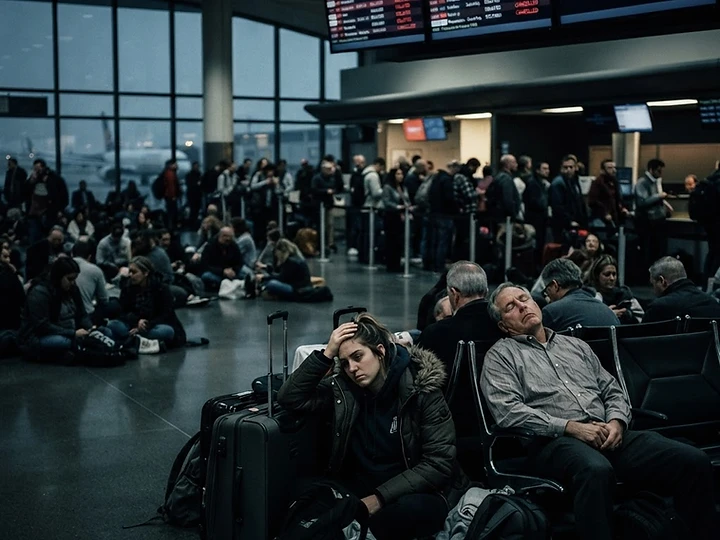
The Ripple Effect of Hub Congestion
Chicago O'Hare, one of the world's busiest aviation hubs, has faced significant operational challenges this week, resulting in widespread flight delays and cancellations. The disruption, which began as a localized issue, quickly cascaded across the national airspace system, affecting travelers from coast to coast. For passengers, the experience has been one of frustration and uncertainty, as airlines struggle to rebook thousands of displaced individuals in a highly constrained environment.
Infrastructure and Operational Strain
Industry analysts point to a combination of factors contributing to the current situation. While weather patterns often play a role in O'Hare's operational efficiency, recent reports suggest that staffing shortages and aging ground infrastructure are increasingly becoming the primary bottlenecks. The complexity of managing a high-volume hub means that even minor delays can lead to significant backlogs, as aircraft and crew are pushed out of their scheduled rotations. This incident underscores the fragility of the current aviation network, which continues to operate at near-maximum capacity.
The Future of Air Travel Reliability
As the aviation industry looks toward the future, the events at O'Hare serve as a stark reminder of the need for modernization. Investments in air traffic control technology and terminal infrastructure are no longer optional but essential for maintaining the reliability of global travel. Furthermore, the incident has reignited debates regarding passenger rights and the responsibility of airlines to provide adequate support during systemic failures. For now, travelers are advised to monitor their flight status closely and prepare for continued volatility in the coming days as the airport works to clear the backlog.


