
Why this is trending right now
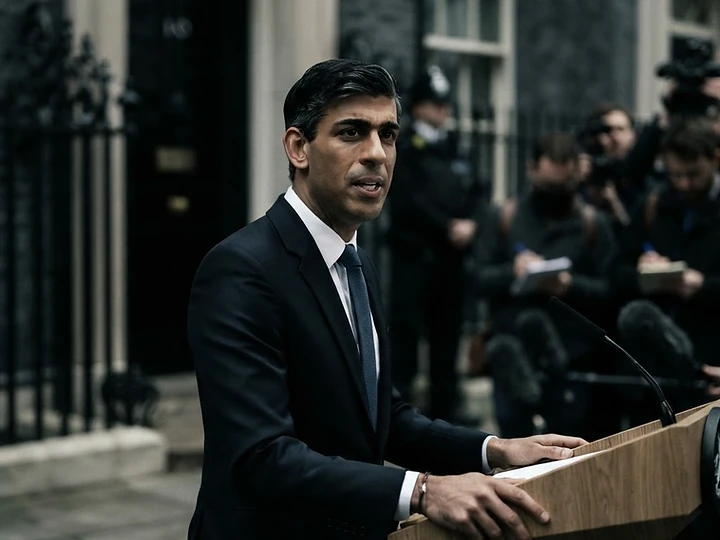
Prime Minister Rishi Sunak has officially called a UK general election for July 4, 2024, ending months of speculation regarding the timing of the next national vote. In a rain-soaked address outside 10 Downing Street on the afternoon of May 22, Sunak announced that he had requested King Charles III to dissolve Parliament, a request that was granted. The announcement was triggered by a confluence of data points that Sunak's team viewed as a strategic window: the UK economy grew by 0.6% in Q1, and inflation dropped to a nearly three-year low of 2.3% in April. According to reporting from the Institute for Government, this marks the first time since 2022 that a Prime Minister has used the powers of the Dissolution and Calling of Parliament Act 2022 to set an election date. The move is trending because it caught many MPs and political commentators by surprise, as a late autumn election in October or November had been the consensus expectation.
The last 24 hours: a timeline
On the morning of May 22, speculation intensified during Prime Minister's Questions (PMQs) when Sunak pointedly refused to rule out a summer election in response to a query from the SNP's Stephen Flynn. By midday, reports emerged that senior Cabinet ministers, including Foreign Secretary David Cameron, were canceling scheduled international travel to attend an unscheduled 4:00 PM Cabinet meeting.
At 5:00 PM local time (BST), Prime Minister Sunak stood at a lectern in heavy rain outside Downing Street. He delivered a speech emphasizing his record on economic stability and national security, stating that "now is the moment for Britain to choose its future." During the speech, protesters nearby blasted the song "Things Can Only Get Better," the anthem of the 1997 Labour landslide, nearly drowning out the PM's remarks.
By 6:00 PM, Labour leader Keir Starmer released a pre-recorded response video, framing the election as a choice between "more chaos" under the Conservatives or "stability" under Labour. Within hours, the Conservative Party's official social media accounts launched the campaign slogan "Clear Plan, Bold Action," while Parliament prepared for a two-day "wash-up" period to pass essential pending legislation before dissolution on May 30.
What could happen next
The immediate focus shifts to the "wash-up" period on May 23 and 24, where the government and opposition must negotiate which bills to fast-track into law. Major pieces of legislation, such as the Tobacco and Vapes Bill and the Renters (Reform) Bill, are at risk of falling if agreement is not reached.
Politically, the Conservatives enter the campaign trailing Labour by an average of 20 points in national polls. Based on historical data from the Electoral Commission, a July election typically sees lower turnout among younger voters compared to autumn elections, which may marginally benefit the incumbent party. However, analysts from the Institute for Government note that the short six-week campaign window puts immense pressure on the Conservatives to narrow the polling gap quickly.
Inferred from the PM’s speech, the Conservative strategy will center on the threat of global instability and the claim that a Labour government would represent a "risk" to the economic recovery. Conversely, Labour is expected to maintain a disciplined focus on the cost-of-living crisis and public service decay, particularly within the NHS. The first televised debates are expected to occur in early June, which will serve as critical inflection points for undecided voters. The election will result in a total of 650 Members of Parliament being elected under the first-past-the-post system, with a majority of 326 required to form a government.
SOURCES — THE RECORD
- General election 2024: What happens now?INSTITUTE FOR GOVERNMENT · instituteforgovernment.org.uk
- Rishi Sunak calls surprise general election for 4 JulyTHE GUARDIAN · theguardian.com
- British Prime Minister Rishi Sunak sets July 4 as election dateASSOCIATED PRESS · apnews.com


