
Why this is trending right now
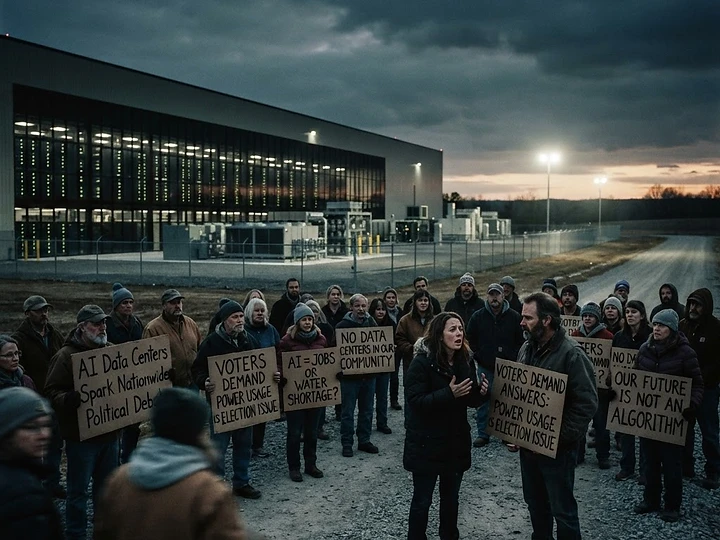
The accelerated construction of hyperscale AI data centers has emerged as a contentious political focus in state and national races, driven by local disputes regarding electrical grid stability, municipal water usage, and escalating residential energy rates. Reporting by the Los Angeles Times and CNBC indicates that grassroots community resistance has forced municipal councils in California, Idaho, and Virginia to reconsider zoning permits, converting industrial computing infrastructure into a major campaign issue.
Search volume spiked following public debates where candidates addressed utility price hikes directly linked to high-density data server deployment. Micron's $50 billion manufacturing expansion in Boise, Idaho, alongside multi-gigawatt utility interconnection applications from cloud providers, has brought unprecedented national focus onto the strain placed on regional electrical grids.
The last 24 hours: a timeline
Twenty-four hours ago, community organizations and ratepayer advocacy groups in California filed formal objections with public utility commissions, challenging expedited grid connection requests submitted by infrastructure operators. Local reporting by the Los Angeles Times highlighted voter resistance ahead of regional midterm ballots.
By midday, enterprise reporters at CNBC published field investigations tracing the direct impact of high-density computing clusters on local real estate, municipal budgets, and sub-station loads in western hubs. Political campaign teams responded by distributing position papers, with multiple legislative contenders taking formal stances against unchecked commercial utility subsidies. By the evening hours, civic discussions across social channels prompted a broad rise in regional search volume across municipal markets.
What could happen next
State regulatory commissions are likely to introduce formal tiered power tariffs for facilities consuming above baseline industrial electricity thresholds. Drawing from precedent established in major technology corridors, public utility authorities will evaluate whether operators must contract dedicated renewable generation before obtaining utility interconnection approvals.
Congressional subcommittees are preparing hearings on national critical infrastructure capacity, evaluating whether hyperscale load demands jeopardize industrial electrification initiatives. In the immediate term, technology firms will increase capital investments into on-site generation, including microgrids, battery energy storage systems, and private power purchase agreements to circumvent municipal opposition.
SOURCES — THE RECORD
- Backlash over data centers hits California, and the midtermsLOS ANGELES TIMES · latimes.com
- AI data center outrage is showing up everywhere from ads to electionsCNBC · cnbc.com
- How Micron's $50 billion Boise buildout is reshaping its hometownCNBC · cnbc.com


