
Why this is trending right now
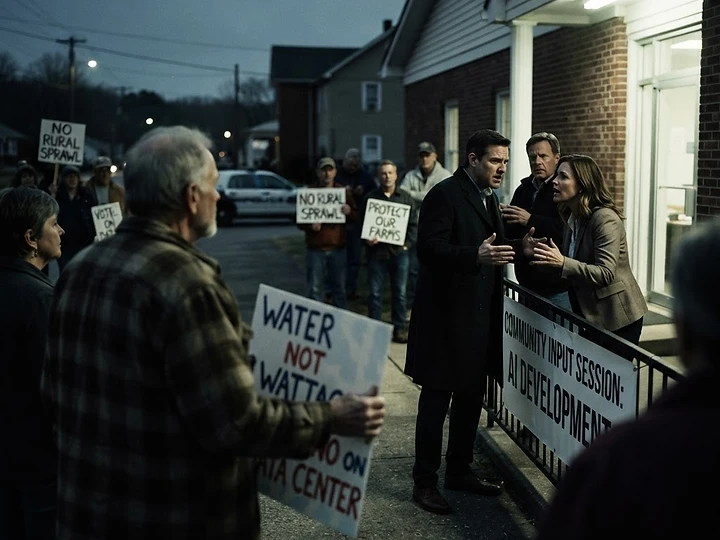
Public pushback against artificial intelligence infrastructure has entered legislative and electoral politics, driven by surging power demands and municipal water consumption. The Los Angeles Times reports that widespread voter anxiety over environmental degradation and municipal grid instability has transformed rapid computing hub construction into a primary campaign issue in statewide races. A parallel report by CNBC Enterprise confirms that consumer outrage over data center expansion has spread from local zoning boards into televised political campaign advertisements.
The last 24 hours: a timeline
Early in the cycle, community groups and municipal utility representatives in several Western and Mid-Atlantic districts escalated formal challenges to proposed campus expansions. The Los Angeles Times highlighted the shifting political dynamic in California, where contested local races now feature public debates over utility rate hikes attributed to infrastructure loads.
By midday UTC, national tech and finance outlets documented broader enterprise responses. Coverage from CNBC outlined how major infrastructure projects, such as Micron's $50 billion memory facility buildout in Boise, are fundamentally altering local political economies and taxing municipal services.
Within hours, campaign platforms across several competitive congressional districts incorporated explicit policy stances on transmission line subsidies, water rights, and computing facility moratoriums. Search queries tracked across regional utility jurisdictions reflected rising residential scrutiny over domestic electricity bills.
What could happen next
Direct evidence from municipal filings and candidate debates demonstrates that transmission constraints and water utility permits are the primary regulatory levers currently available to local officials. Developers face concrete risks of delayed commissioning dates where local utility commissions refuse interconnection approvals.
Inference indicates that operators will increasingly shift future capital commitments toward regions offering sovereign power agreements, nuclear co-location, or municipal tax exemptions with pre-negotiated utility caps. The basis for this inference lies in the public pushback documented by the Los Angeles Times, which shows that community opposition mounts fastest where residential ratepayers absorb distribution upgrade costs.
SOURCES — THE RECORD
- Backlash over data centers hits California, and the midtermsLOS ANGELES TIMES · latimes.com
- AI data center outrage is showing up everywhere from ads to electionsCNBC · cnbc.com
- How Micron's $50 billion Boise buildout is reshaping its hometownCNBC · cnbc.com


